Friday, November 17, 2017

Whitewashing Wicker

My boys and I love the library. We typically raid something off every shelf while we're there. Non-fiction, fantasy, audiobook, you name it. Unfortunately those items easily scatter all over my house, and whenever I put them on my bookshelf they always looked cluttered. While I was at a yard-sale one week, I found this nifty piece of wicker.


It was a bout 2 x 1 feet, and had a reinforced lid. I loved the idea of having a covered place to put all the mix-matched titles. Plus it was only $4.00, so it was an easy yes. I brought it home and found the perfect spot to put it next to my bookshelves. The shelves are whitewashed from IKEA, and I absolute love them (Staging them is still a work in progress). So, as I was sitting there, admiring my clutter solution, I thought "I bet I could whitewash that". I looked up a great little video on how to clean and whitewash wicker.

I purchased a paintbrush and Minwax Wood Stain Whitewash Pickling and got to work.
(Click on the picture to be directed to an Amazon description.)


It only took me about two hours total and the project was finished! Now I absolutely love my library basket. I love the way the wood still shows through the whitewash, giving it warm undertones. It's also not a flat white, there are different hues of the whicker showing through. It's one of my favorite small decor pieces!  


It makes the area next to my selves so clean, cohesive, and bright. I love it. If you decide to try it out, let me know how your whitewash projects go in the comments below!


Saturday, November 4, 2017

Pitching

Every year, there is this amazing conference I like to attend called Life, the Universe, Everything (LTUE) in Provo, Utah. While I was there, I signed up for two separate pitch sessions. One was with a publisher, and one was with an agent. It was exciting, stressful, rewarding, educational... Everything I hoped it would be. I did a lot of research before pitching, and thought I'd share some of the main points I discovered.

First off, there are basically three different kinds of pitches:

1st: The Elevator Pitch

2nd: A Conference Pitch

3rd: A Query Letter.

All three of these are different forms of presenting your book, but at the heart of all three of them is the same question... What is your story about?

You would think that answering this question would be easy, but the truth is, learning to narrow down my novel to a few key sentences was write a query was almost as hard as writing the entire novel.

First of all let's talk about how each of these pitches should look.

An elevator pitch is one sentence to hook your audience and make them ask questions.

A conference pitch is what you would say after that hooking sentence. You follow up with about a paragraph worth of storytelling that captivates your audience even more and makes them want to read the book.

A query letter is the above two pitches, but lengthened to about two paragraphs. This can be more of a summary of your book, but should absolutely draw your audience in. This summary is followed by a paragraph describing the genre, word count, title, and comparable titles, then another paragraph of your personal biography and qualifications.

Something my writers group did to help us become more confident about pitching, was we made shirts with the following on the back.

Rachel Huffmire
Ask me about "Granted".


This was super helpful, because people continually asked me about my book, in the hall, before class started, at lunch. I had so many opportunities to practice. I would start with the elevator pitch, and if they showed interest, I would continue with the conference version. By the time I was ready to pitch to agents and editors, I had already had plenty of run-throughs to get my jitters out. Plus, I made some excellent friends and we beta read for each other.

All in all, my recommendations are, if your novel is ready to query, try pitching. It is a great way to meet people and a better way to get your foot in the door. When I pitched to the publishing house, they requested a full manuscript and asked about my other work. They even invited me down to their office to take a private tour and let me sign my name on their wall. Because I put myself out there last year, I had an opportunity to "level up" in my understanding of the publishing world. It was a great experience. If you have a pitch, leave a comment! Practice pitching here. I'd love to see what you're working on!


Tuesday, July 4, 2017

Book Review: Dangerous by Shannon Hale


Summary: When Maisie Danger Brown wins a cereal sweepstakes and goes to astronaut camp, she doesn't expect to gain superpowers. After her teenage team handles alien technology, it unexpectedly injects Nanorobot technology that changes their bodies molecular composition. But before they can feel too cool about it, the team is fragmented and hunted for their abilities. Maisie struggles to figure out who she can trust and gather the powers so they can fulfill their original purpose: saving the world.

Personal notes: Shannon Hale is one of my favorite authors. I discovered her in college when I picked up Goose Girl, and immediately knew she was something special. This book had me laughing out loud at unexpected moments with her delightful wit. Short story, I stayed up till 2 AM on a weeknight to finish this book. I had a special interest in this particular book because of a lecture I attended by Shannon Hale where she talked about her research process on this story. She actually sat down with big time scientists and asked if all the technology and science in her book was probable. She said it was such an engaging lunch, because the scientists were excited about the technology she had imagined and dove into explaining the possibilities it could offer. It was fun to recognize the moments she had pinpointed and to learn real science while I was reading.

Why this book is important: 
Strong Protagonist: This book featured a smart, strong female protagonist. Maisie was intelligent and reasonable and awesome. I like the whole "smart is the new pretty" craze going on. This definitely fit that theme.
Disabilities: Maisie only has one hand, so there is some bullying and self evaluation that goes on because of it, however, it wasn't discussed as in depth as I've seen in other books. She finds a way around her disability, but it didn't exactly become a strength to her. She builds a robot hand, using her other strengths to ease the disability, but I would have loved to see a moment when her disability became a critical part of her success.
Romance: I discuss this more in the "Content" section, but Maisie stands up for abstinence in a particular scene. At the end of the book, she discusses a little bit about infatuation vs. love. So, while her relationship with the romantic interest is unhealthy in a few ways, I feel like Hale does a good job at making you recognize that and think about it. Instead of letting the romance run wild emotionally, she really does make you wonder "Is this a good relationship for Maisie?" because Maisie is very thoughtful about it herself.


Content: 
Language: Maisie is a sweet, innocent character, who bleeps out others expletives in her own mind, so you'll get the gist when someone is swearing without actually hearing what they say. It was funny and well justified, so I found it entertaining rather than distracting.
Sex: There is a romantic interest and plenty of kissing in the book, but it led to a moment that I think is important to see in YA these days. When things got a little hot and heavy, and her boy hinted at taking things all the way, Maisie has a moment of clarity and stands up for herself and her virtue. She lays out a great model for youth to follow. She shows Maisie making a firm decision early on to support abstinence, and then how that decision makes it easier for her to reason through the moment, and stay true to herself. I think it's important for teens to read this scene because it's not one that is commonly represented in YA literature or entertainment.

Supplementary material: 

Shannon Hale has a long list of books that I would gladly recommend. She writes for children, young adults and adults. She writes fantasy, science fiction, romantic comedy and graphic novels. She is extremely talented and makes me laugh in all her work. Some books to check out if you like this one are:

Childrens:

The Princess in Black Series

Rapunzel's Revenge
Calamity Jack

Ever After High Series

The Unbeatable Squirrel Girl


Young Adult:

The Books of Bayern Series:
Goose Girl
Enna Burning
River Secrets
Forest Born

Princess Academy Series:
Princess Academy (Newberry Honor)
Palace of Stone
The Forgotten Sisters

Book of a Thousand Days


Adult:

Austenland Series:
Austenland
Midnight in Austenland

The Actor and the Housewife


Tuesday, June 27, 2017

Book Review: Harry Potter and the Sorcerers Stone by J. K. Rowling

Happy 20th anniversary HP!


Summary:
Harry is an orphan living in the cupboard under the stairs in his grumpy uncle and prickly aunts home. When a mysterious collection of letters arrives, Harry is amazed to learn that he is a wizard, and has been admitted into Hogwarts school of witchcraft and wizardry. There he learns about a dark wizard named Voldemort who was defeated when he tried to attack Harry as a baby. Whispers and clues begin to hint that perhaps Voldemort is returning to power, and Harry and his friends must work together to prevent him from getting what he wants.

Personal notes: 
I read this book when I was nine and was enchanted. I loved jumping into such a unique world and was thrilled that the protagonists were the same age as me. I feel like I hit this lucky jackpot, where Harry and his friends grew up at the same pace that I did. Every few years a new book was released and by the time I graduated high school, the last book came out. There were elaborate release parties where people would dress up and wait in lines for hours till midnight so they could be the first to get their hands on the stories. I have never seen anything like that since. JK Rowling genuinely brought magic into millions of people's lives.

Why this book is important: 
I asked my six year old (who is halfway through book 4) why these books are important for kids to read and he said "because these books are awesome!" These books have the power to introduce an entirely new world into their imagination. Face it, everyone wishes they could go to Hogwarts. It is said time and time again that HP got children reading again. I believe the reason is because it was purely exciting. I love that my six year old is thrilled to be reading a 720 page book (book 4) because the story is so engaging to him. That is truly magical.
Supplementary material: 
The supplemental material for Harry Potter is endless. Movies, theme parks, toys, board games, cosplay... I also love the pottermore website. There is a fantastic short story by JK Rowling on the history of magic in America that I would love to see expanded into a movie. If you can't get enough HP, go over and check it out.

Monday, June 19, 2017

Book Review: My Fathers Dragon by Ruth Stiles Gannett


Summary:
Elmer meets a stray tabby cat who tells him of a mysterious island where a baby dragon is held captive by the forest animals. Elmer packs a small backpack of odds and ends and sets out to free the baby dragon. Can Elmer outsmart the animals and save the sweet little dragon using only 24 pink lollipops, some rubber bands and a hair comb?
My thoughts:
This book was darling. The bad guys aren't scary or bad as much as they are selfish or impatient, so if your child scares easily, this one is a good book for you. The heroes are absolutely sweet. It was really enjoyable to see how Elmer dealt with his problems in a clever and unexpected way. It reminded me of how my friends and I used to play make believe when we were little. The entire book is innocent and charming.

Why this book is important to read:

This was the first chapter book I read to my children. The chapters are short, the illustrations are sweet, and the plot holds them captive. It is a great way to transition your child to the world of novels. After this book, my son was genuinely interested when I asked if he wanted to read other, harder books (I think we read Wizard of Oz next).
Supplemental material:
There are three books that complete the story of Elmer, so this book will finish quickly, but your child will be held hungry to see how it all ends. I found a cute site that has a whole bunch of supplemental materials for your child to use while you read. You can make your own backpack with cut outs of Elmers supplies. There are coloring pages and other activities. Find them here:
http://www.homeschoolshare.com/my_fathers_dragon.php

Monday, June 12, 2017

Book Review: Redwall by Brian Jacques


Summary:
Young Matthias mouse wishes to be a great warrior like the legendary Martin. But living inside the peaceful Abby walls of Redwall, there's not much need for that sort of thing. Not until the vicious warlord rat named Cluny the Scourge arrives with his whip-like tail. Besieged by Cluny's hoard, Redwall residents must suddenly learn how to defend their beloved home and Matthias goes on a mission to discover Martin the Warriors long lost sword and enlist the woodland creatures to assist in driving off the horrible rats.

Personal Notes:

I read this book as a ten year old and just read it again to my six year old son. It is so exciting and well written. The world Brian Jacques created is such a beautiful one. His villains are immediately dark and ruthless and a bit scary. But it makes the hero all the more brave when he is willing to face up to such a menacing villain as Cluny. When I was little we had a rooster that we were all afraid of, and we named him Cluny the scourge because that was the worst possible thing we could have called him.
Why it's important to read to your child:
The puzzles and riddles and language of this story are so enriching. They will get your child thinking and learning without realizing. The plot progresses at such a wonderful pace that your child won't want you to stop. But the most important aspect is the bravery that so many of these character possess. (Some scenes may be a little scary for young ones) They could easily refuse to take on the challenges that face them. They are given more than one opportunity to surrender, but it is never discussed as an option. We talked about themes of bravery, villainy, defending loved ones, fighting, solving riddles.
Supplementary Material:
There is an entire series in the Redwall world and all of them that I have read are on the same level of quality. I tore through them as a young girl and now my son is eager to read them himself. There was a wonderful series on PBS while I was growing up that was an animated version of the books. There were tons of episodes and my brothers and I all worked hard to record each one on VHS so we would ultimately have the entire series. There was one episode that we always missed. It was a neat series because they took a moment after every episode to interview Brian Jacques. He would talk (very animatedly in a Scottish accent) about the world and characters of Redwall and it was one of the first stepping stones toward my interest in becoming a writer.

Monday, June 5, 2017

Book Review: The Spiderwick Chronicles by Toni DiTerlizzi and Holly Black.

Summary:
Jared's parents just divorced and now he has to go live in his aunts rotting old house. Odds and ends start mysteriously disappearing and the children begin to suspect they aren't the only ones who live there. Mischief and mystery fill the walls, making the siblings work together to figure out what could possibly be causing so much havoc.


My thoughts:

This book had beautiful illustrations, was funny and I enjoyed the plot right along with my kids. It only took an hour and a half to read the whole thing, so we were finished in three days. The setting was fun and I could see my kiddos imagination running the entire time I read. He was riveted.
Why this book is important to read to your child:
First off, I love that it introduces a whole different side of fairies. They are a little more like monsters than Tinkerbell. Boggarts, goblins, etc...
Second, the writing was great. I was genuinely impressed and happy to read it to my kids.
Third: These kids come from a turbulent family, one that I've seen far too often in real life. The parents are recently divorced and the children are struggling. There is a lot of name calling and anger going around, and yet they desperately cling to each other for support. They are good people in a stressful situation, so you like them even though you understand they could be nicer to each other. Jared gets in trouble at school, his twin brother Simon turns to the comfort of his pets, and Mallory obsessively trains with her fencing foil. But when they discover a mystery inside the house, they all work together to bravely figure out what is going on. I loved talking to My kids about this family dynamic. It was easy to recognize the anger in these children and discuss why they acted the way they did. We talked about compassion, self soothing, anger, bravery and teamwork.
Supplementary material:
This book is first in an entire series that we are currently tearing through. The books get a little more exciting and intense, but the writing stays up to par as far as quality goes. I will post reviews of these books as we go because my kiddos enjoy them so much.
There was a movie made of the series, but I haven't seen it, but if any of you have, I'd love to see your opinion in the comments!

Monday, May 29, 2017

Book Review: Matilda by Roald Dahl

Summary:
Matilda is a prodigy. She is sweet, resourceful and reading classical novels by the age of 5. Unfortunately, her parents are simpleminded crooks who don't even notice. They send her to a horrible elementary school ruled over by the villainous Miss Trunchbull, a retired shot-put Olympian who hates children. But Matilda is determined to put things right. Determined to write her own story by mischievously solving problems Matilda learns to also look out for those around her.


Personal Notes:

I discovered Roald Dahl in fourth grade and have been an avid fan ever since. For Christmas I asked for his complete works and have loved introducing his stories to my children and husband. My husband particularly loved this story. That's the beauty of Roald Dahl; his stories reach every age. Dahl isn't afraid to explore dark humor, or mischief.
Why this book is important to read to your child: 
I think a lot of people misunderstand this story. Matilda understands that the adults around her aren't very nice, and knows that someone should do something about it. But she is small and quiet, so in a very smart and comical way she tries to teach the adults a lesson. I think it is a lighthearted way to show children that bullies can be outsmarted. I had some great discussions with my family about how we treat each other, what my own children's options are when someone picks on them, how we don't have to quietly accept inappropriate behavior from others (although I don't promote gluing someone's hat to their head as an appropriate option.) I think this book important because it is empowering to children to both have confidence in themselves if they feel someone isn't treating them correctly, and also being resourceful and using their head rather than lashing back.
Supplemental material:
The movie by Danny Devito is a family classic. I have loved that movie since I was little. But even more powerful is the new Matilda Musical! David and I were lucky enough to see this show a week after we finished reading the book and it was incredible. One of my favorite musicals of all time! It brought new power and life to the story. If you can get your hands on the soundtrack, do it. Tim Minchim (composer) is the perfect blend of intelligent wit and off-kilter humor for this show. It digs even deeper into the theme of self empowerment and was beautifully done.

Monday, May 22, 2017

Book Review: The Invention of Hugo Cabret by Brian Selznick.

Summary:
Hugo is an orphan living inside the walls of a Parisian train station, fixing clocks and stealing croissants. When he discovers a broken mechanical man in the ashes of his fathers office, he is determined to fix it. Perhaps it will give him a secret message from his father. As he tries to steal parts from the local toy maker, Georges, he is caught and made to work for the old man. Magic, movies and mystery surround Georges, and Hugo is determined to find how everything connects.


Personal Notes:
It's a thick book, (534 pages!) but that's what is so fun about it! It is full of so many beautiful illustrations you and your child can tear through the whole novel in just a few days. (It took us about 2 hours total to read it) I give it 5/5! My six year old loved it as well. It offers a beautiful snapshot of the early days of cinema. It's full of fun mysteries and chase scenes, and will really get their imagination going.
Why This Book is Important to Read to Your Child: 
It was awesome to see the confidence on my kiddos face to know that he finished such a big book so quickly. The themes in the book were valuable and I feel like I was able to discuss some really important topics with my little guy. Some topics you can discuss are: homelessness, lies, perseverance, desperation, hope, resourcefulness, friendship, and creativity.
Supplemental Material:
There's a charming movie on Netflix right now that you can watch to celebrate finishing such a big book with your child. It embellishes the role of the station inspector and adds a layer of humor that we both enjoyed. Plus, the book talks about a lot of old movies, and shows stills from the films, but watching this movie, you actually get to see the clips that Selznick talked about in the book.

Thursday, April 14, 2016

"Or Do Without..."

Use it up
wear it out
make it do
or do without.

This phrase was coined during the great depression, and as a kid, I often heard it in my own home. Many of us have retained this little tidbit of advice in the back of our heads, but think it doesn't apply to us during this era of prosperity. However... there's a vital bit to this phrase that I think we're all forgetting...

"Or do without."

In helping families de-clutter their homes, I've found that many of us have a fear of the future. We save small bottles of shampoo for vacations. We save electronic cords in case we find an antiquated electronic that needs it. Why do we do this to ourselves?

I believe the heart of this saying is not in abusing our possessions, or holding on to things that have no use for because we might need it in the future. I think this phrase means something much kinder.
Use it up: Don't be wasteful

How often do we throw out rotten leftovers? It's easy to give in to the urge of replacing what we already have before it has been used up. I think we could all take a lesson from Great-Grandpa and find a use for what we already have. I love the current DIY re-purposing craze because it brings us back to the heart of resourcefulness. We feel thrifty, imaginative... There are lots of reasons to feel good about this advice.

Wear it out: Let possessions serve their purpose.

Do you still have clothing in your closet with the tags on it? Why? Are you saving it for a special occasion? Do you have lotion that you haven't used since your last date? Why not pamper yourself when no one's around? We often save things for special occasions, but why not enjoy what we own now? It can brighten up a dismal day. It can spice up a lackluster room. You are allowed to love your items year round.


Make it do: Use the things you already have.

Do you find yourself buying clothing when you already have sufficient for your needs? People often own twice as many clothes as they actually wear. When we have this much stuff floating around, it causes clutter and stress. You'll find you can be much happier with "just enough", than with an excess. When you detox your closet and keep only things you truly love, you'll find it makes a difference when you go shopping. You'll be less compulsive, and aware of what truly makes you happy.

Or do without: Simplify your life by removing things you don't need.

There is a particular group of people that I find have more stuff packed into their closets and spilling out on their floors than most... I like to call them Provisioners.

"I might needs this when..."
"If it floods, I'll be glad I have this..."
"When my daughter comes back from college she'll want..."

Hardcore Provisioners refuse to throw things away based on fear. It is hard to get them to de-clutter because it's a literal leap of faith for them. They can't trust that they'll be fine without something if the time ever comes. But when they begin to let go, they are the most liberated. 

Disclaimer: I believe in provisioning to an extent. We are not talking about food storage, we're talking about clothing, backup items in case the first breaks, dusty closets smashed full of unused pillows... 

Conclusion:

People in the depression learned a new way of life. A level of resourcefulness and thrift. Many of us live on the opposite side of that pendulum. We are surrounded by plenty. It is time for us to learn a new way of maintenance. We can literally drown in our surplus if we aren't careful. Maybe take a step back from your home and think about how this phrase can apply to you. Happy tidying!

Rachel

Friday, November 20, 2015

Surviving Nanowrimo Without Caffeine


I'm not a coffee drinker. In fact, I don't do caffeine often. Last year however, when I read a Nanowrimo motivational essay, the first bulletpoint for success was:


DRINK LOTS OF COFFEE!

I laughed, but once I got in the thick of Nanowrimo madness, I realized that a caffiene rush could help propel my productivity. So, I began the tradition of starting each writing session with a mug of Stephens hot chocolate.

It was lovely.

I looked forward on those cold November mornings to my mug and keyboard. I can see how people get attached to such a calming moment with themselves. I finished my 50,000 words in just twenty two days of writing. It was incredible! 

Here is my proud first print of my novel! 
 

But this year, I don't have hot chocolate. I'm halfway through Nanowrimo, dreading every moment I sit down to my keyboard because I have no idea how to crush that many crappy words out of my brain. It is much, much harder without caffeine.

But I've learned a few things. Ways to dig deeper, and let go so I can accomplish my goals regardless of how hard the day is. First:


1. Take a moment to inspire yourself.

Meditation. Connecting with Nature. Praying. There are so many ways you can feed your soul. Writing is often a spiritual experience for me and I like to involve God in the process. I begin with a prayer, then spend a moment of mediation- not thinking about my book, but thinking about what I believe in. What matters to me. More often than not, those themes find a way into my writing and make it more genuine, complex and enjoyable.

2. Never hit delete.

I read somewhere that you can't create and critique at the same time. I love that sentiment. Critique allows for second guessing and backtracking, the two sure killers of momentum. Let your fingers run away with your keyboard. Let them spell out exactly what your mind is thinking, without worrying about sentence structure, consistancy, grammar, etc. You'll find that though you'll make mistakes, your words will be vibrant, raw, and impulsive. Your draft may be riddled with cliche's or plot holes, but those are things that can be fixed. Just finish the scene. You'll have an emotional guidepost to build onto till you have a perfect picture.

3. Don't expect a final draft.

Have you ever seen an animated film storyboard? The pictures drawn out are sloppy, often colorless, but when you pair them next to the finished product, they are unmistakably the same scene. The storyboard captures the emotion and direction the storytellers wanted to portray. When you are writing for nanowrimo, you are writing the storyboard. You are in no way completing a finished product. Don't stress yourself out by telling yourself that it is.

4. Get a support group.

I have an amazing, wonderful, lifesaving critique group called Writing Through Brambles that adopted me last year. They live two states away, but continue to let me skype in to meetings and read their work via Googledocs. All six of us are Wrimo's this year, and so for our most recent session, we did a skype write in. Most of our time was spent in silence, typing madly on our keyboards, but there was something about the sound of us all typing that made me feel so supported. Like I could actually follow through and do this! Every time I see their updates on facebook I am motivated and reminded that if I want to win, I should go get writing.

Now, time for me to get back to writing my novel. Cheers!

-Rachel

Monday, November 4, 2013

Chicken and Orzo Soup


     Fall is here, and one of the things I miss most about home are the bright yellows, oranges and greens of the trees. Some of my favorite memories are of walking through BYU campus, thousands of brightly colored leaves lining the sidewalks. This soup brings me a little closer to home. It is absolutely beautiful. All the colors of the vegetables really make this soup pop visually. The chicken and pasta together are hearty, and the thyme and corn add a little bit of sweetness. So if you're in the mood to make this season a little more nostalgic, this soup is a great way to do it. 
     This recipe is fast, and stands great on it's own. So, put away your sour cream and cheese, because this honestly tastes better without it. Also, if you have never used Orzo pasta before, you are in for a treat. It is small, and shaped like a grain of rice, so you can have a hearty "noodle soup" taste without the mess that comes along with longer noodles.
 
Recipe:
1 tsp. Oil
2/3 C. Diced Carrots
1/2 C. Diced Celery
1/2 C. Diced Onion
1/4 tsp. Salt
1/8 tsp. Pepper 
1/2 tsp. Thyme
1/2 tsp. Parsley
2 Breasts Diced Chicken (About 2/3 lb.)
4 C. Chicken Broth
1 C. Water
1/2 C. Uncooked Orzo Pasta
1 C. Corn
2-3 C. Baby Spinach
1 T. Lemon Juice

Step 1: Dice your vegetables and chicken. 
(*Tip: I have found this soup is easier to eat if the ingredients are similar sizes. Try to avoid having large chunks of chicken, medium sized slices of celery mixed in with all the naturally smaller bits. Keeping everything small also helps to evenly distribute the flavors, so every bite is balanced.)

Step 2: Heat the oil in a pan (I prefer olive oil) and saute the vegetables with the spices.

 Step 3: Add chicken. 
(*Tip: If you are using raw chicken, you can saute it at the same time as the vegetables. It helps cut down on dishes if you do everything in the same pot. Personally, I like to use a rotisserie chicken, because it has a better texture, and adds a little more flavor.)
 Step 4: Add broth, water, orzo and corn.
 Step 5: Bring to a boil and then let simmer for 20 minutes.

Step 6: Just before serving, add the baby spinach and lemon juice. Let it cook just enough to wilt the spinach leaves.

Step 7: Serve and enjoy!
(*Tip: A little trick I learned while serving soup. If you fill the ladle up 2/3 full, then double dip the ladle, the surface tension of the soup will pull any drips off the bottom. This prevents you from dripping across your table, or counter as you fill up your bowls! Amazing huh!)

Monday, October 14, 2013

Personalized T-Shirt

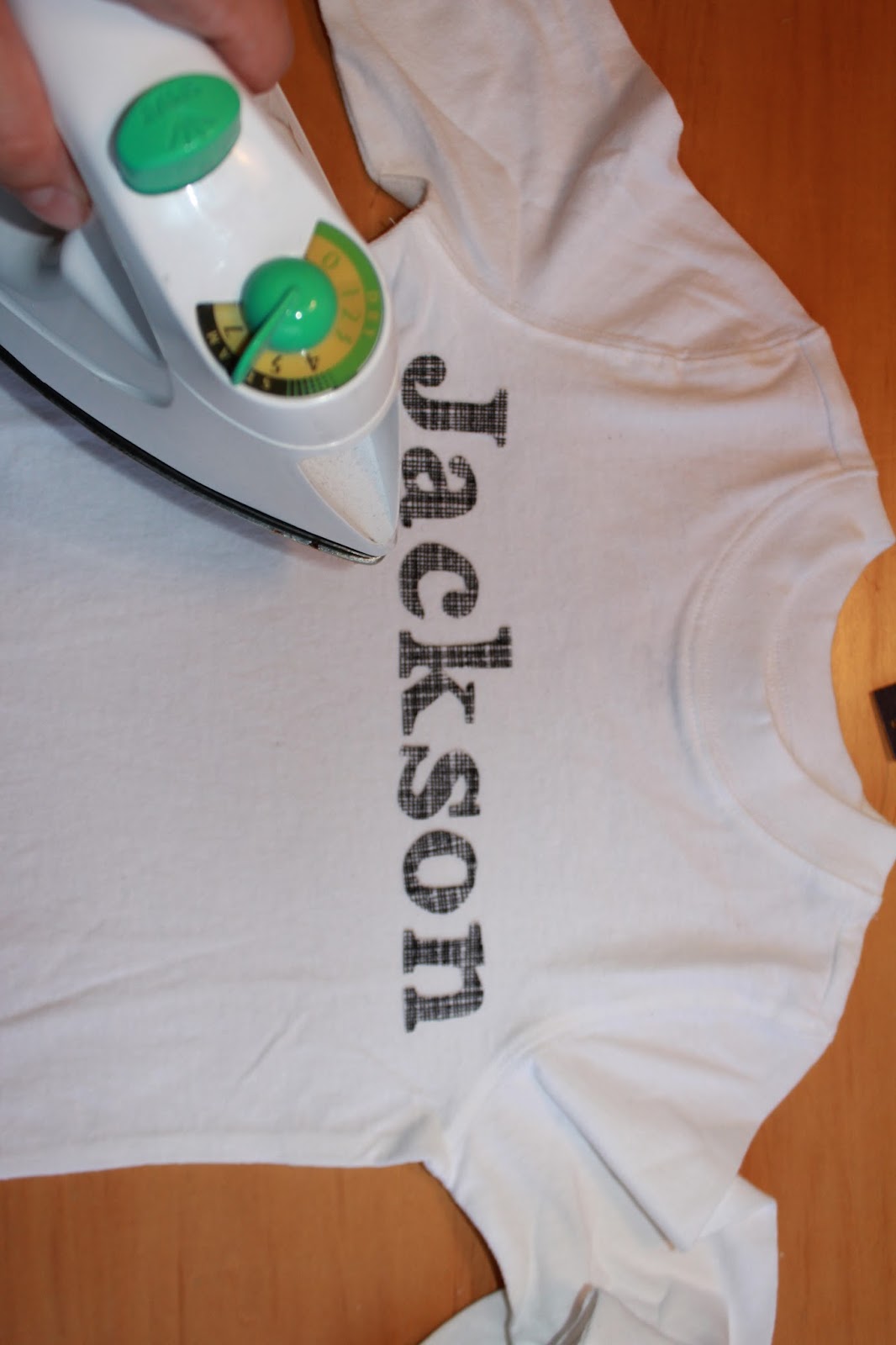
I have wanted to make personalized T-shirts for a while now. My good friend Mighty and I got together to make them, and OH MY GOODNESS!!! They were so cute! It was so much easier than I thought it would be.

Supplies
pattern
iron on interfacing
iron on adhesive
fabric
embroidery floss
shirt

Step 1: Print out your template. I used a font named "Archistico". You can find the free font download here.
Tip* Depending on the size of your shirt, you will want to adjust the size of your font. Once you print it, hold it up against your shirt to make sure it's the right size.


Step 2: Trace the lettering onto your interfacing.
Tip* I used an iron on non-woven interfacing. The thinner, the better.

Step 3: Iron your interfacing on to a scrap of fabric.
Step 4: Cut out your letters.
Step 5: Iron your letters onto an iron on adhesive strip. Here is an example of what to buy. Iron on adhesive.
You can tell my spacial reasoning skills aren't all that great. I thought it would come out correct, but nope. It's backwards. Peel off the paper backing and you can stretch the adhesive off from around the letters.
Step 6: Prepare your T-shirt. Remove stickers, tags, etc...
Step 7: Place your letters in the desired spot on your shirt, then iron them on.
Here is what my shirts looked like at this point. They look cute, but the adhesive won't stay permanently so you'll have to do a little bit of hand stitching at this point to anchor them on.
Step 8: Using embroidery thread that matches your fabric, tie a double square knot at the end of your thread.
Step 9: Begin on the outer edge of the first letter and pull your thread through about 1/8th of an inch away from the edge. Just enough to catch the fabric, with a little extra showing on the outside.


Monday, September 30, 2013

Water storage- How much water do I need?

      Every year, My church organizes a "Provident Living Expo". It's an event meant to help families in my area prepare for emergencies. Three years ago, I was asked to put together a booth on water storage.
     At the time, there were several wildfires sweeping through the area, cutting off freeway travel and burning down homes. To top it off, the state was also in a severe drought. In fact it was so bad that Governor Rick Perry organized a statewide fast to pray for rain. I'll admit, people were a little more concerned about water storage then.
     I put together a pamphlet covering all the basics on water storage and passed it out at my booth. I guess I did an okay job because I've been asked to run the same booth for three years in a row. As the expo just came to a close this year, I thought "Hey! This would be a great blog series." So, if you're looking for where to begin when it comes to water storage, you're in the right place. And don't worry--- I'll keep it simple! First up...

How much water do I need?
The red cross recommends that you store 2 weeks worth of water for your family.

You'll need 1 gallon of water per day, per person.
So, to figure out how much you need, here is a handy dandy family worksheet! Print it out, and stick it somewhere to remind you to get it done!


One gallon per person will be enough for drinking and food preparation.  

If you want water for personal hygiene purposes or pets, you'll need to add additional storage. (You can cut down on water needs by storing baby wipes. That way you can give yourself sponge baths instead of having to store large amounts of water.)

One of the most important things about water storage is, if supplies run low, never ration water.  Drink the amount you need today, and try to find more for tomorrow.  Minimize the amount of water your body needs by reducing activity and staying cool.

I hope this motivates you to get started in your emergency preparedness. Just take it one step at a time, and before you know it, you'll be ready for whatever may come!

Monday, September 16, 2013

Sportsmanship for 3 year olds...

     Lately it seems like my life has revolved around Candy Land, Go Fish, and Connect Four. Little L has a little competitive streak that makes me laugh, unless I win, which means I'll be dealing with a meltdown. For a while, I thought it would be easier to let him win consistently. Tantrum avoided + game enjoyed = success. This was an okay idea until he started to play games when his friends came over. The instant he realized he didn't win, he lost it. That's when I realized that I  had been missing out on teaching opportunities by always letting him be the winner. Not to mention he had an inflated sense of how good he was. I decided it was time to stop being so easy on him.

    I don't mean that I'm going to crush him every time we play. (I know that sounds pretty confident on my part, but face it, Mommy vs. 3 year old... It's pretty obvious who's going to win.) So, here are some strategies I've discovered to help me continue to have fun with my toddler, while giving him the opportunity to be a better sportsman.

Here are some ideas:

1. Give your child a head start. Everyone will have more fun if you are trying your hardest to win. If you are racing, let them start closer to the finish line. If you are playing Go Fish, give them a target amount of matches, and give yourself a higher target. Get creative!

2. Celebrate winning, without making other players feel inferior. I hate winning against sore losers. It totally detracts from my victory. Success story: Picture this; me and 2 three year olds battling it out on Candy Land. L's friend was totally dominating the game and his face grew more and more desperate, full of hope that he would pull some last minute maneuver and take the victory. I was more worked up than him, wondering how I could avoid the inevitable meltdown at the end of the game and not downplay the victory for his friend. The inevitable victory happened and, before L could react I shouted "You made it! Hurray! Now everyone run to the castle! We have to make it to his party!" The friend was excited that the party was in honor of him, and L felt like he got to participate in the rewards of the victory. Which ultimately, isn't that why we all play games? To enjoy ourselves?

3. Show children how to recognize their strong points, even if they lose. Children soak in compliments like a paper towel. If you continually compliment them on achievements during the games, it's easy to reiterate them at the end of the game, and take the focus away from the loss, and focus more on the accomplishments. "I can't believe you tricked my queen like that! That was so clever!" or even "Wow, you are getting so much better at this!"

4. Model good behavior. Offer continuous praise throughout the game to other players. Show that you can have fun without having to be the best.

5. Role Play it up! A little bit of acting can go a long way and be an effective way to prove a point. If you have an older child or adult playing with you, you can show them Exhibit A: vs. Exhibit B. Ask them which friend they would like to play with, the sore loser or the congratulatory friend.